
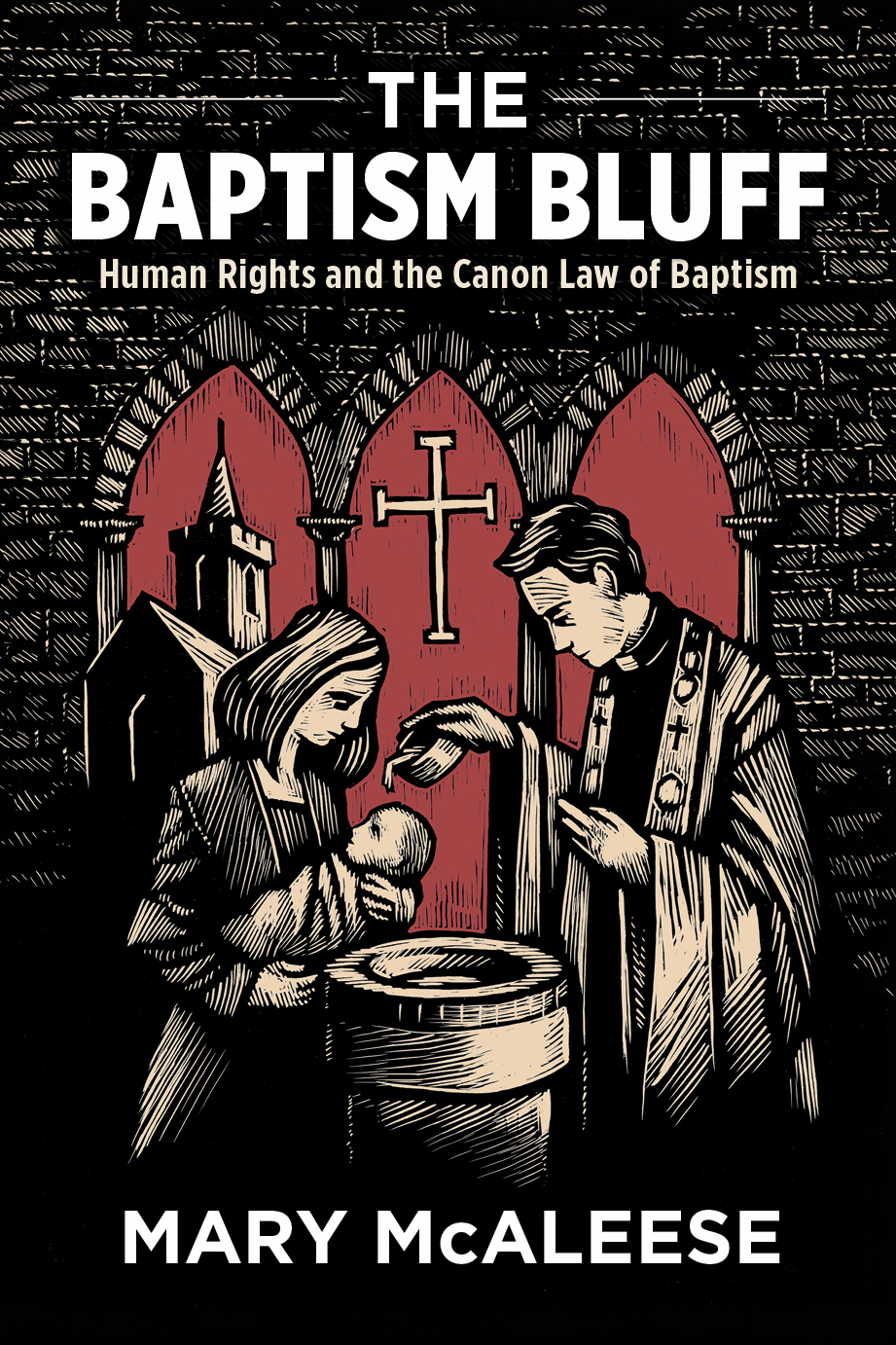

The Baptism Bluff by Mary McAleese
‘The Baptism Bluff is an incredible read! The book is seminal and profound, extremely well researched and brilliantly written. It is an extremely powerful, challenging, honest, and timely book.’
John J. Shea, OSA, Human and Religious Development (Fordham University, 1981–2002; Boston College, 2003–2012)
‘A work of rigour and compassion.’
Eoin McNamee, author, director of the Trinity Oscar Wilde Centre, and director of the M.Phil. in Creative Writing at Trinity College Dublin
‘Dr McAleese writes with the authority of a canon lawyer, the clarity of a deeply concerned, faithful Catholic, and the unmistakable compassion of a woman on a mission. She is not disputing the spiritual power of infant baptism. It is canon law and its unjust, lifelong impositions on innocent babies that she wrestles with. This is the work of a conscientious, dedicated, spiritual seeker – the kind of woman who can save us from outdated canon laws and the evils of clericalism.’
Fr Brian D’Arcy, author and broadcaster
No one is born a Catholic. One becomes a Catholic by baptism. Most Catholics are baptised as babies. Manmade Church canon law deems them to have made baptismal promises which bind them to forever membership and which oblige them to be obedient to Church teaching in their public civic and private religious lives. The sacrament of Confirmation, also usually undertaken as minors, requires them to ‘renew their baptismal promises’, a glaring and largely unchallenged part of the baptism bluff.
The Church is structured on the presumption that the pope and bishops, collectively known as the authors of the teaching Magisterium of the Church, have the right to regulate and control (including through penal sanctions), much of the life and especially the thinking of members of the Catholic Church. That presumption requires the Magisterium to ignore contemporary understanding of the inalienable human rights of the individual to freedom of conscience, opinion, expression and religion, and freedom to change religion. It requires all Catholics to overlook the fact that babies cannot give informed consent to promises at baptism and no one can consent on their behalf, robbing them forever of such a vital realm of choice. The baptismal bluff is a foundational, existential building block of the magisterial control infrastructure now facing an historic breakdown in trust.
The Baptism Bluff is the story of one member’s journey deep into that presumption. It is a journey from the passive acceptance expected of Church members to a studied questioning of its origin, credibility, and the legitimacy of the laws which flow from it. It is a journey away from an infantilised religious sensibility, superficial and reliant on fear, and conformity, to an unforced spiritual conviction; from an excluding, inauthentic God to a God whose embrace is absolute inclusion, absolute love. Ironically it is not a journey away from the Church but the opposite, a journey into the overlooked deviations, deceptions and vanities which skewed its mission but which if reset and reformed could leave it redeemable still.
Mary McAleese is a distinguished lawyer, academic, author and former President of Ireland whose scholarship has brought sustained scrutiny to the place of children within the laws and structures of the Catholic Church. A canon lawyer with a doctorate from the Pontifical Gregorian University in Rome, she has developed a particular interest in the relationship between Catholic baptism, canon law and children’s rights. Her work examines the lifelong canonical consequences of infant baptism and raises fundamental questions about consent, membership, freedom of religion and the protections owed to children under international human rights law. Drawing on decades of engagement with law, public life and the Catholic Church, she has written and lectured extensively on Church governance, accountability and reform, bringing rigorous legal analysis to a field of growing contemporary importance.


Reviews
There are no reviews yet.